

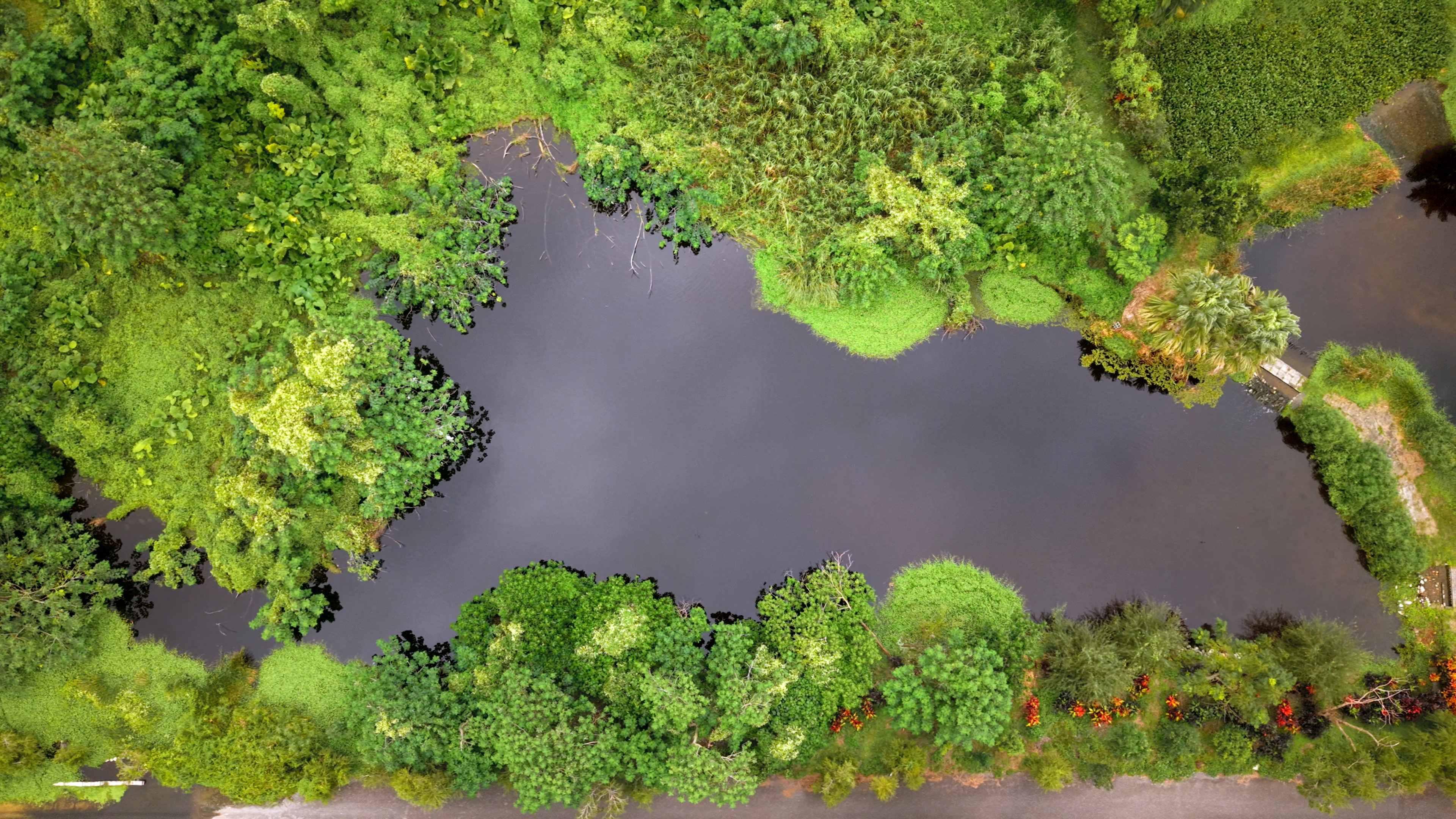
 The treated effluent nurtures a rich ecosystem within the park's eco-pond
From Pulp Mill to Environmental Education Hub: A Sustainability Experiment Born from Industrial Transformation
Traveling along Highway 11 on the Hualien-Taitung coast, a towering red-and-white striped chimney comes into view as you approach Guanghua Street in Ji’an Township. This landmark belongs to the Chung Hwa Pulp Corporation (CHP) Hualien Mill, a subsidiary of YFY Inc. Once Taiwan’s largest pulp production base, it has now been reimagined as the CHP Environmental Education Park. This demonstration site for the circular economy and environmental education showcases a new possibility for the coexistence of industrial upgrading and ecological harmony.
The catalyst for this transformation stems from the Hualien Mill’s reevaluation of its corporate role amidst the global climate crisis. In 2021, S.C. Ho, founder of the YFY Group, established the "YFY Academy." Centered on the "Carbohydrate-Based Economy," he proposed three core principles: "Low Carbon, Low Energy Consumption, and De-fossilization." For the Hualien Mill, which has operated for nearly 60 years, this was not just a starting point for corporate restructuring, but an active declaration toward "2050 Net Zero Emissions."
"We are the only mill in Taiwan that maintains the complete pulp-to-paper manufacturing process," said Chiu Yi-sheng, Director of the Hualien Mill. "Every link from forest to paper offers an opportunity to realize the value of a circular economy." In 2022, encouraged by Professor Liu Wan-yu of National Chung Hsing University, the mill began converting traditional pulping processes into educational materials. By collaborating with schools to develop lesson plans, students are invited into the facility to understand the significance of resource regeneration through the birth of a sheet of paper. In 2024, the park passed the Ministry of Environment’s review, becoming the first manufacturing site in Hualien County to receive Environmental Education Facility and Venue Certification. This park, centered on environmental protection, energy, and education, witnesses the transformation of a corporation from a producer to an educator, marking a new chapter in Hualien's local industry moving toward net zero.
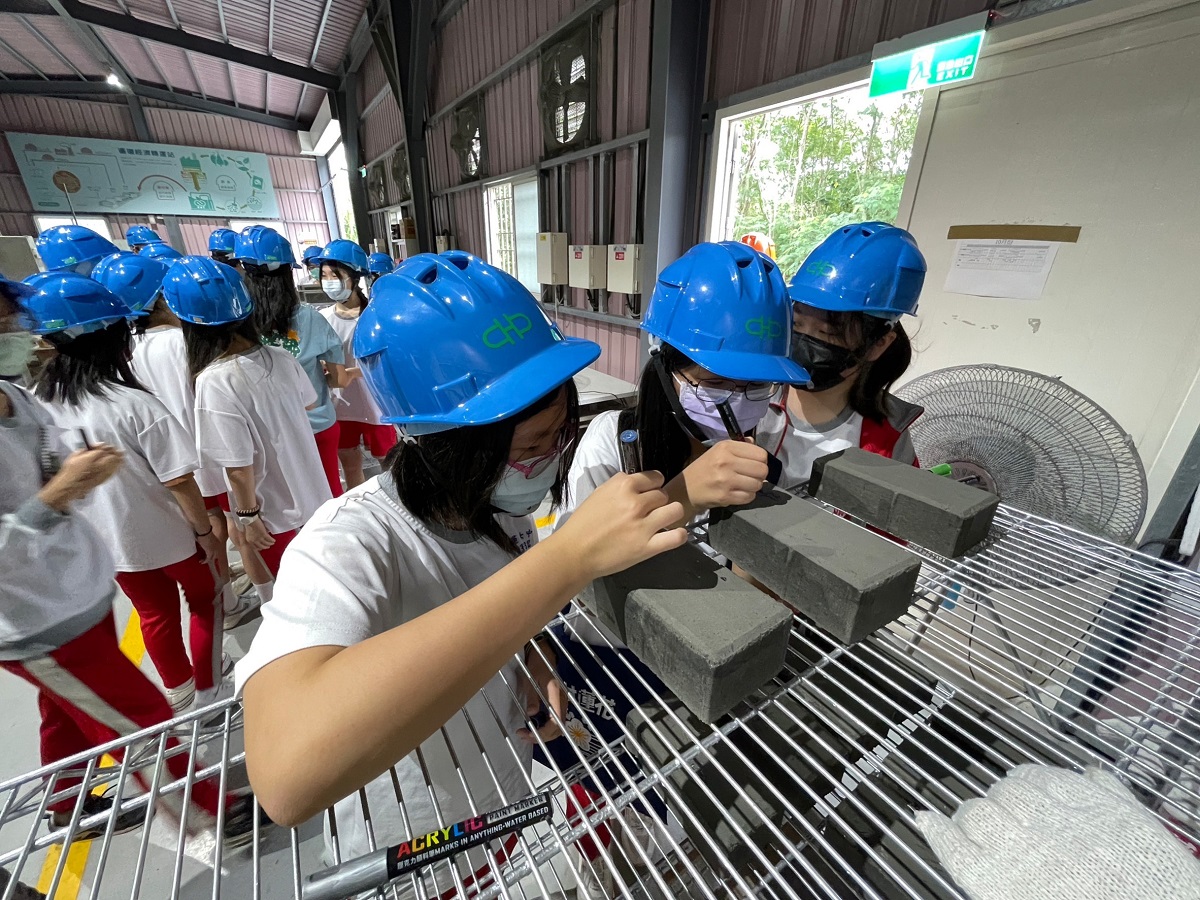 From Sludge to Bricks
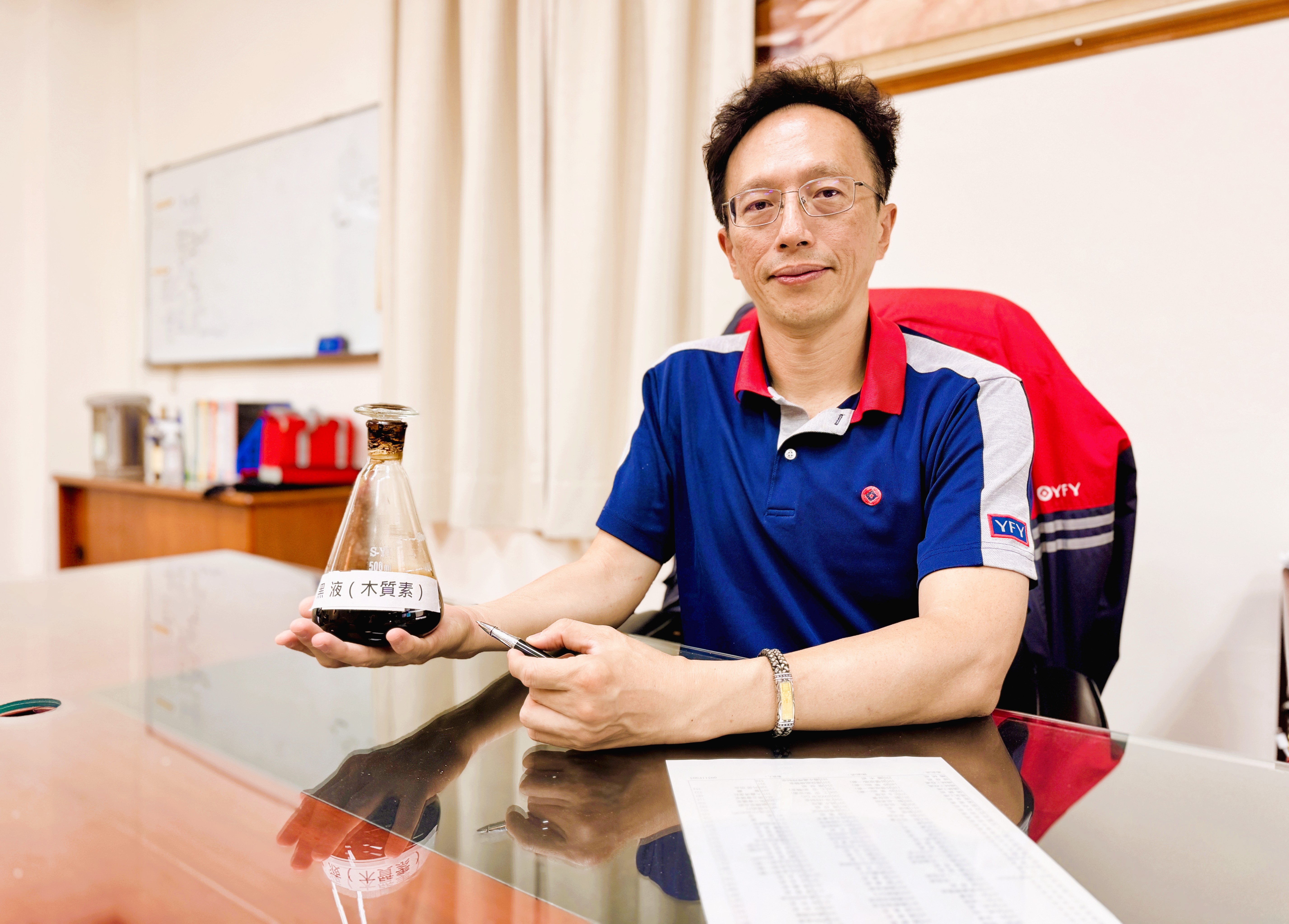 "Black liquor," held here by Plant Manager Chiu Yi-sheng, is a critical element in biomass power generation.
Beyond developing technologies for regenerative cycles in pulping, water usage, and power generation, the CHP Hualien Mill selects wood chips from sustainably managed forests at the raw material stage to fully implement a sustainable circular economy. Wood chips and rice husks generated during the manufacturing process are recycled and repurposed into organic soil. This soil is used to cultivate tree species such as Bald Cypress and Taiwan Incense Cedar. Furthermore, in collaboration with a research team from National Chung Hsing University, the mill conducts soil carbon sink experiments to monitor carbon sequestration capacity and long-term storage potential. These efforts help establish a foundation for localized "Carbon Credit Methodologies" in Taiwan.
If energy circulation is the "arteries" of CHP, then water resource management is its "blood." Within the Hualien Mill, all process water undergoes multiple stages of purification and recycling. The facility is linked to the Hualien County Environmental Protection Bureau for 24-hour real-time monitoring to ensure the safety and quality of discharged water. The ecological pond within the park, fed by recycled water, has become a vital source for nurturing life.
In 2022, the Hualien Mill commissioned the Wild Bird Society of Hualien to conduct a year-round ecological survey of the park’s eco-pond. The results recorded nearly 900 bird sightings across 47 species and 29 families, including protected species such as the Ring-necked Pheasant, Osprey, and Chestnut-münia. Along with various dragonflies, frogs, and fish, these inhabitants form a complete wetland ecological network.
"It is hard for the public to believe that these creatures all thrive within a pulp mill," said Hou Ming-tso, who is in charge of environmental education at the park. To provide the public with a concrete understanding of how a corporation practices sustainability and coexists with the environment, the Hualien Mill invited Principal Chan Man-fu of National Hualien Girls' Senior High School and his faculty team to visit for an exchange. Based on the mill’s industrial characteristics, they helped design five major lesson plans. Subsequently, the Hualien Mill joined forces with National Dong Hwa University, Tzu Chi University, Hualien Girls' Senior High School, and Hualien Industrial High School to integrate the papermaking process and the complete circular economy into school curricula. This allows students to step beyond the limitations of textbooks and become observers at an actual production site. It fosters critical environmental thinking and a sense of responsibility, deepening their commitment to a "Net Zero Green Life" and environmental sustainability.
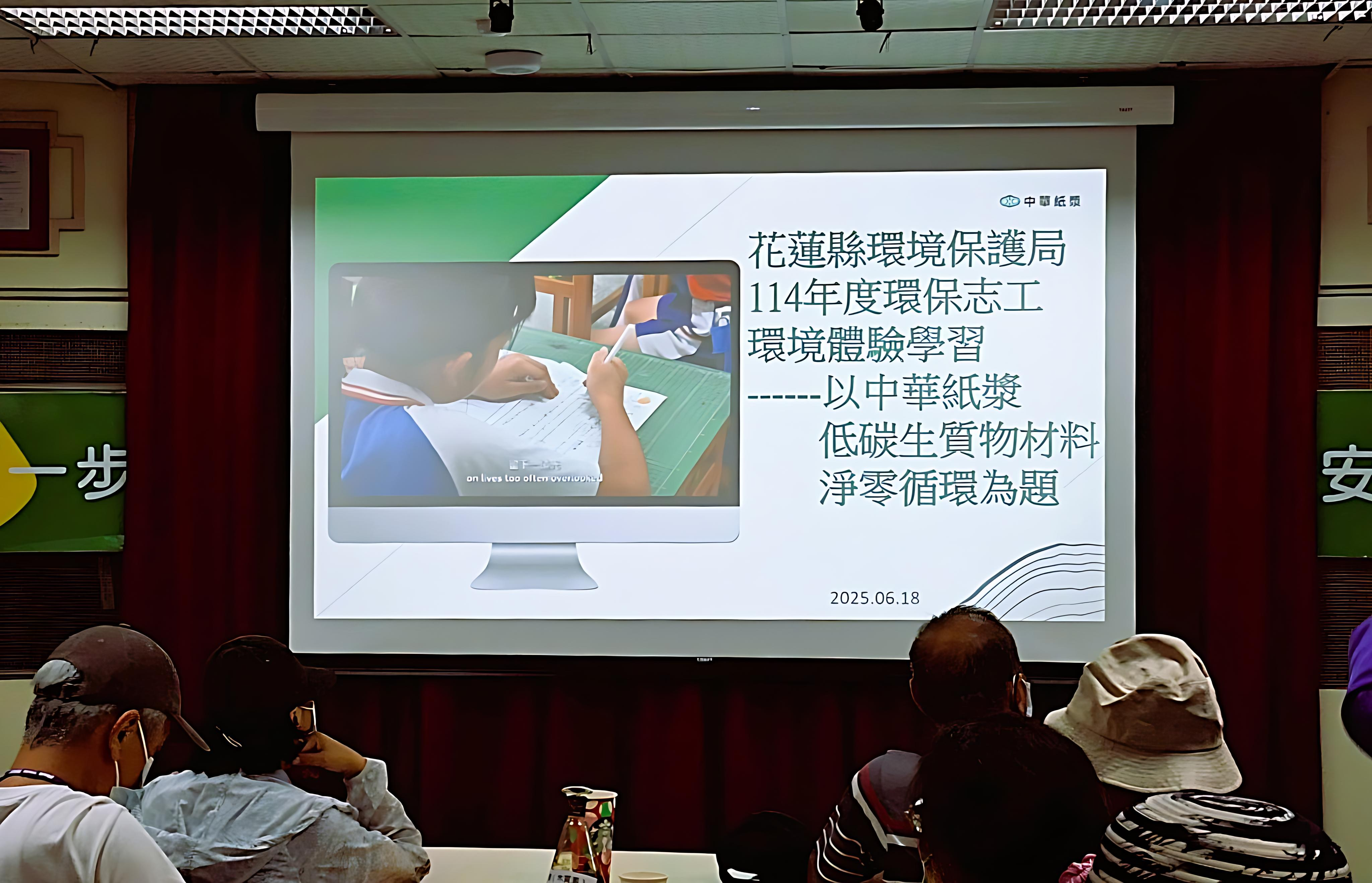
The CHP Environmental Education Park translates abstract circular economy concepts into practical lesson plans
Education: The Key Force for Changing the World
The promotion of environmental education is a high-value "soft power revolution" for corporations and a key force for changing the world. After three years of dedicated effort, the park has officially received its certification, becoming Taiwan’s 267th environmental education facility. Setting a precedent for manufacturing sites in Hualien County, it has successfully positioned the corporation as a driver of sustainable civic awareness. "When students see the journey of a single sheet of paper and understand the source of every drop of water and every kilowatt-hour of electricity, the impact is far deeper than anything found in a textbook."
To transform abstract circular economy concepts into tangible learning experiences, the CHP Environmental Education Park offers a series of hands-on courses. These lead participants through the "rebirth" of pulp, paper, energy, and waste, helping them understand how the circular economy reduces carbon emissions and helps cool the planet.
Among these, the most popular course, "Generating Power from Wood," uses guided tours and interactive lesson plans to introduce participants to the process of converting biomass into green energy via cogeneration systems. Starting with the story of "Turning Black Liquor into Green Power," the course illustrates how the traditional pulp industry utilizes pulping waste to achieve energy reuse and carbon reduction goals in the face of global climate change challenges.
Another course, "From Sludge to Bricks," allows participants to personally press eco-bricks by mixing inorganic residual sludge from the pulping process with fly ash and bottom ash from the boilers. This gives students a firsthand experience of the "zero-waste" spirit—the idea that "Today’s waste is tomorrow’s raw material"—and encourages them to think critically about the role of creative design in resource circulation.
The value of these courses lies not only in transferring knowledge but in inspiring reflection. They help children understand that behind the birth of a sheet of paper lies a complex connection between forests, energy, water resources, and human life. They empower the youth to apply scientific knowledge and skills to complex problems, creating a deeper and broader impact on future sustainable development. Simultaneously, the program guides adults to re-examine their own consumption habits and encourages the industrial sector to recognize the sustainable potential and infinite value inherent in the circular economy.
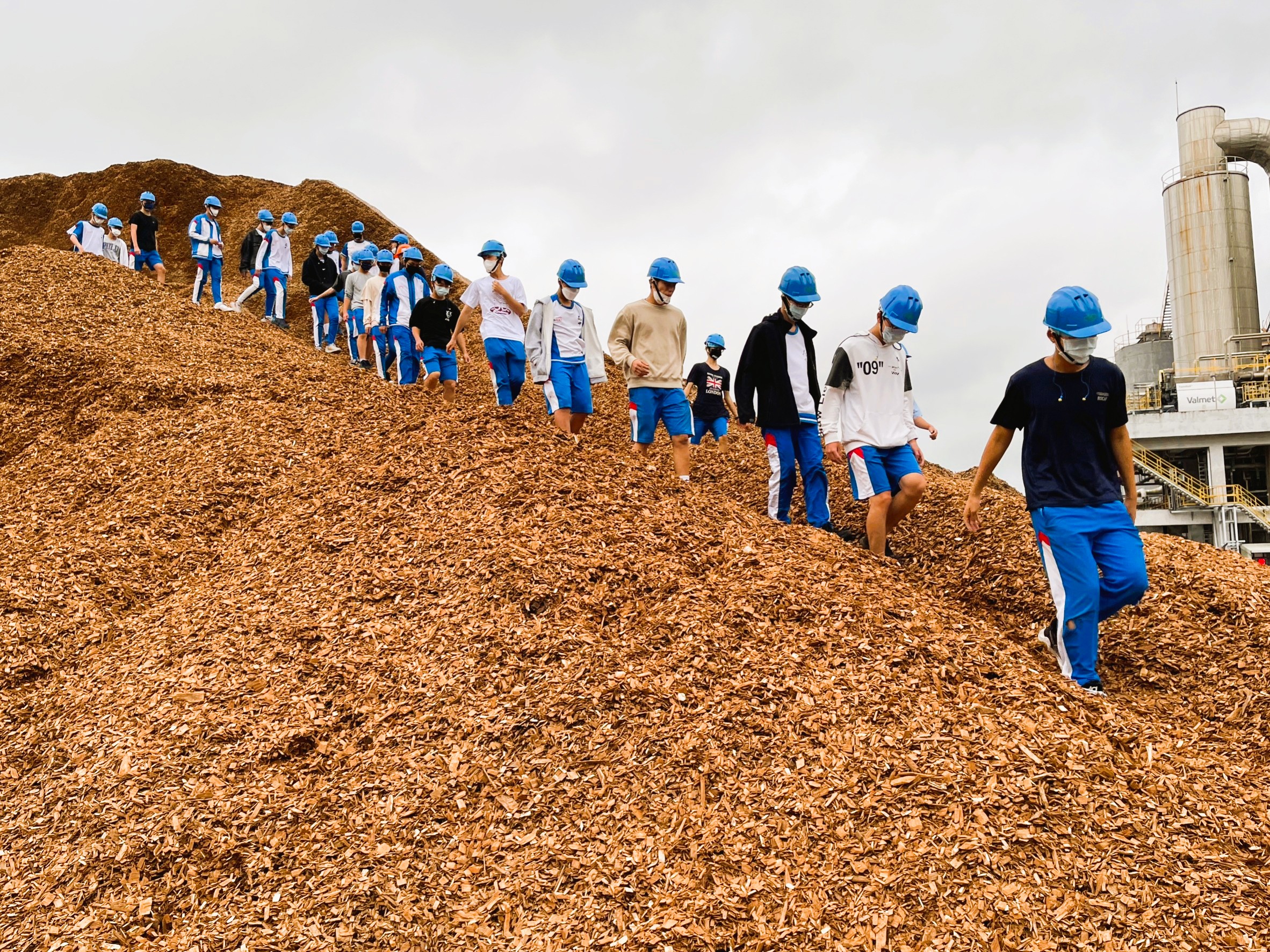
Integrating circular economy into environmental education: Students observing the process on-site. (Photo: CHP Hualien Mill)
Action Leads to Change: From Experiential Learning to Local Green Initiatives
The CHP Environmental Education Park has already welcomed over 1,000 visitors. In 2025 summer , it hosted environmental volunteers and ambassadors participating in the Hualien County Environmental Education Experiential Learning Program. On the day of the event, with the assistance of volunteers from the CHP Retiree Association, participants moved from the classroom to the field. They visited the wood chip storage area—the source of pulping—as well as the carbon sink experiment zone and the organic soil cultivation area established in collaboration with National Chung Hsing University. After learning how wood chips and rice husks are transformed into soil carbon sinks, they experienced the joy of harvesting vegetables firsthand. The exchange was lively, leaving every participant with a wealth of knowledge and inspiration.
This learning journey not only turned knowledge into action but also deepened the volunteers' understanding of the circular economy and corporate carbon reduction practices. In response to the county government's "One Tree per Household" initiative, the volunteers and ambassadors took home saplings provided by the CHP Hualien Mill to plant in their communities or gardens. Using greening as a starting point, they are planting the seeds for a more sustainable future. The Hualien County Environmental Protection Bureau, the organizer of this program, believes that persistent action will eventually bring about real change. In the future, the Bureau will continue to mentor and integrate various resources to foster a diverse range of environmental education sites in Hualien, ensuring that the seeds of sustainability take root and flourish in this land.
Source: Hualien Environmental Protection Quarterly, No. 114 (Winter Issue, Dec. 2025)https://edu.gogofinder.com.tw/book/content.php?id=117436772
Video: https://www.facebook.com/share/v/1C6TEWGxqD/