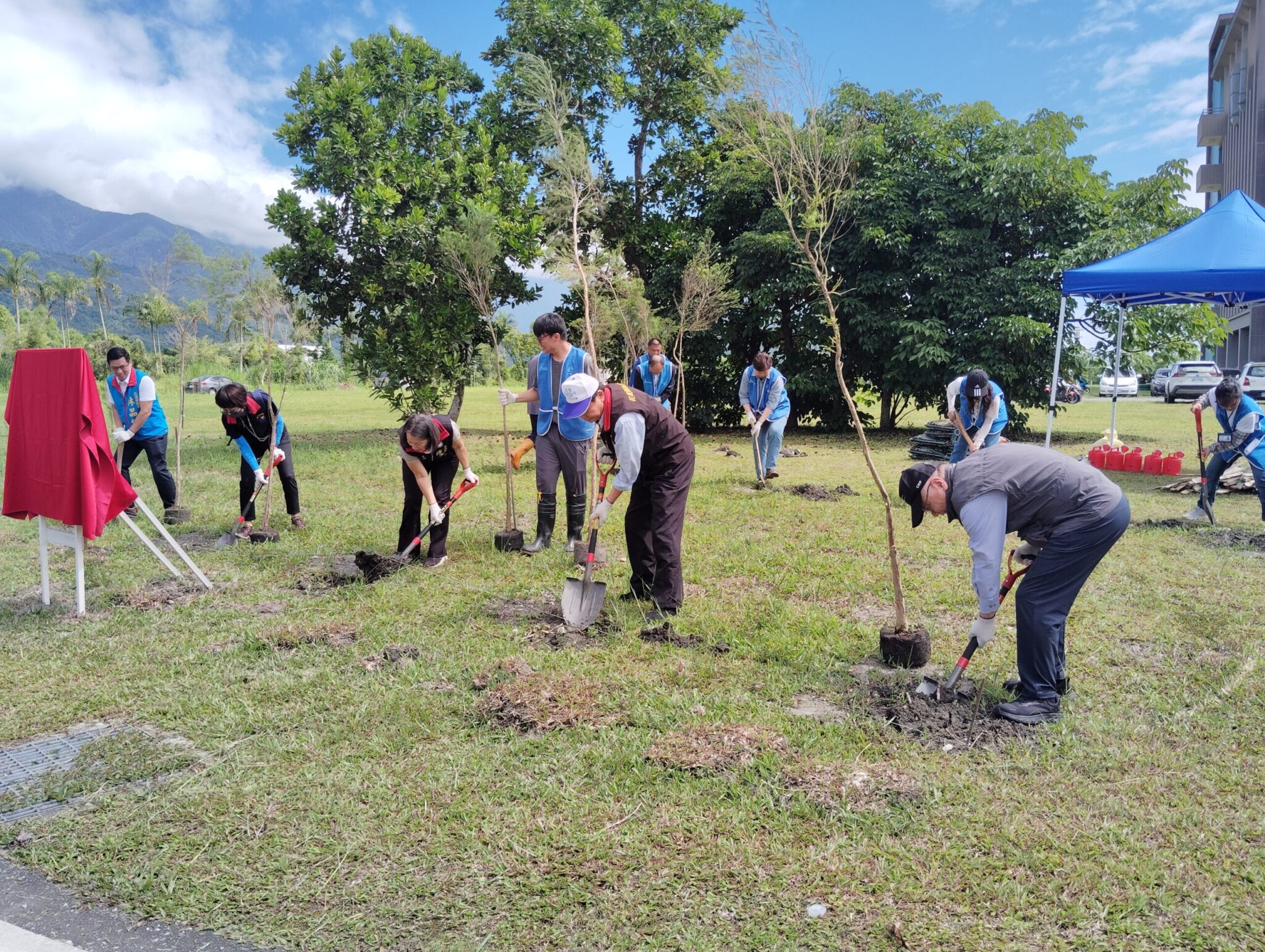

New Dawn Joy Land held a tree-planting and donation ceremony today in partnership with the Chung Hwa Pulp Corporation (CHP). Liang Kuei-hua, CEO of the Dawn Institutional Care, stated that the organization hopes to help adults with autism develop vocational skills through planting Australian tea trees and extracting essential oils. CHP Chairman Kirk Hwang added that individuals with disabilities should not have their potential restricted, and the company will continue its deep commitment to Hualien.
Located in Shoufeng Township, Hualien County, New Dawn Joy Land is Taiwan's first sanctuary specifically built for adults with autism. Utilizing a green nature-based care model, the facility provides residential care, day care, and various training programs to help individuals with autism live in a rural, natural environment. During today's ceremony, several distinguished guests picked up shovels to plant the tea trees, looking forward to watching them grow into mature trees.
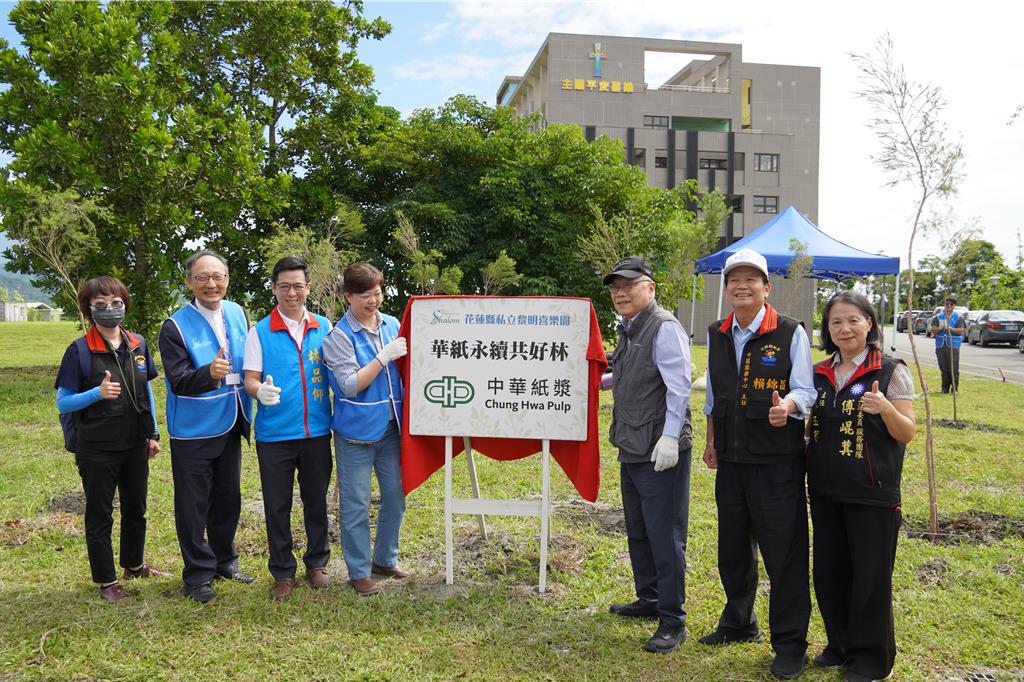
According to Dawn Institutional Care, CHP contributed NT$345,000 for this initiative, which covers 300 Australian tea tree saplings, a professional distillation machine, and organic fertilizer to help establish the "CHP Sustainable and Mutual Good Forest." In the future, the entire process—including planting, caring, harvesting, extracting, and packaging—will be designed as a vocational training curriculum for young adults with autism. They will also receive performance bonuses to foster a sense of participation and self-confidence in their work.
Liang Kuei-hua explained that after New Dawn Joy Land acquired the agricultural land 13 years ago, they consulted the Hualien District Agricultural Research and Extension Station to evaluate suitable crops. The Australian tea tree was ultimately chosen, leading the organization to further explore the extraction processes for hydrosols and essential oils. Dawn Institutional Care has long placed "green nature care" at the core of its services. Since individuals with autism often have higher sensory stimulation needs, planting trees, caring for plants, and interacting with nature can satisfy these sensory needs while building stable working capabilities.
Liang pointed out that the "CHP Sustainable and Mutual Good Forest" is not a short-term activity but a long-term companionship project. In the future, forest trails and recreational spaces will be created for residents to move about in nature. Every step from harvesting leaves to essential oil distillation and bottling will be integrated into the vocational training. The goal is to help these individuals gradually develop work concepts and a sense of achievement. The essential oils and hydrosols extracted down the road can also serve as products to give back to supporters, creating a virtuous cycle.
Kirk Hwang stated that this project was initiated through a proactive proposal by company employees. Many colleagues are Hualien locals who wish to give back to their hometown. He admitted that he did not have a deep understanding of Dawn Institutional Care in the past, but was deeply moved upon learning about the organization’s nearly 50 years of long-term commitment to caring for the underprivileged, expressing great admiration for the dedication of the volunteers and teachers.
Kirk Hwang remarked that many individuals with autism are simply different from others, which does not mean their abilities are limited; the key lies in whether someone is willing to accompany and guide them. He also mentioned that Hualien has faced successive natural disasters like earthquakes in recent years, making business operations challenging. Nevertheless, CHP continues to invest in the research and development of low-carbon green materials as well as local infrastructure, aiming to deepen its roots in Hualien and Taitung through practical actions.
News Source: udn News