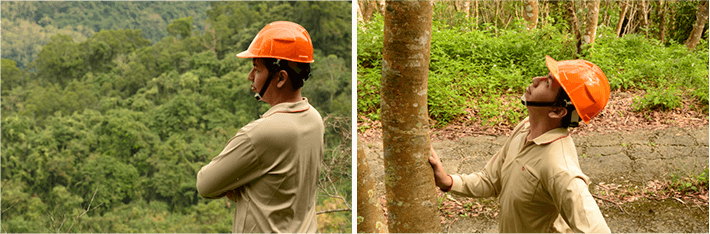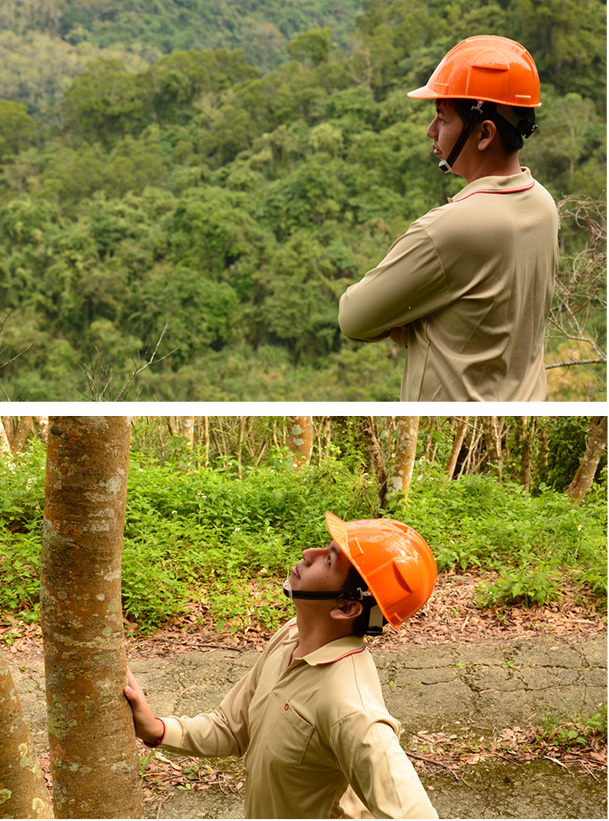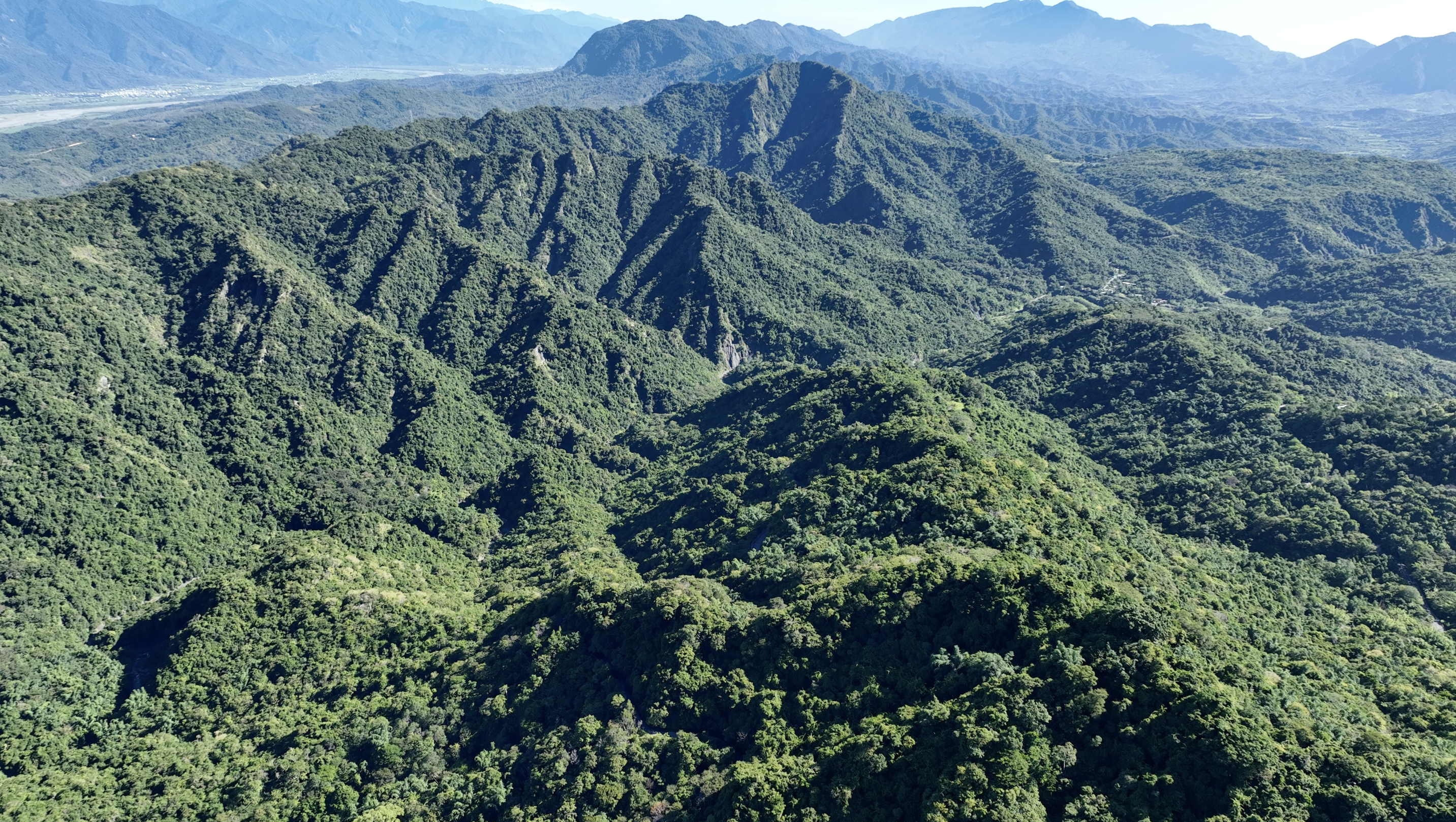
We own 30,000 hectares plantation forest spread between Taiwan and China.
It offers an opportunity of 300 thousand tons of carbon fixation each year.
The sustainability of the forestry paper economy:
Forest resources serve as the source of CHP's major raw materials. We implement sustainable forestry management to ensure that forests grow in good balance with the surrounding eco environment.
We recycle waste paper back to paper making to prolong the life cycle of the original source of woods.
 Forest Types and
Management Policies
Forest Types and
Management Policies
Primary Forest: Refers to natural forests that have not been significantly
disturbed by human activities and maintain their natural ecological appearance,
possessing high biodiversity and complex ecosystems.
Planted Forest: Forests established through artificial tree planting and
afforestation, usually serving specific economic or ecological conservation
purposes.
Natural Forest: Forest ecosystems formed through natural reproduction and
regeneration, including forest stands of natural succession such as secondary
forests.
Forest Management and
Timber Production Principles
Taiwan Forestry
Conservation Positioning and E-Management:
Taiwan's forestry farms all take ecological conservation and
long-term environmental protection as their core objectives, without conducting
commercial forestry and logging operations.
The E-management model for forests is introduced to progressively
establish a resource survey database, complemented by technologies such as GPS,
geographic information systems, and satellite positioning instruments for
regular surveys. This accurately captures forest growth data as a basis for
forest management and carbon sink assessments.
Sustainable Raw Material
Forest Management of Mainland China Dingfeng Forestry:
Located in Mainland China, the Ding Feng Forestry base covers an
area of 433,000 mu, with an affiliated nursery producing one million qualified
seedlings annually for afforestation and replanting needs. The total standing
volume surveyed for growth has exceeded 1.35 million m3.Upholding the principles of rational harvesting and sustainable
utilization, it implements gradient management centered on ecological
harvesting, scientifically assesses the annual allowable cut, and minimizes
environmental impacts. At the same time, it optimizes the forest resource
structure, protects soil and water conservation in watershed areas, and
maintains a carbon sink balance.
Commitment to the global strategy for sustainable development
For enterprises, it is imperative to implement the COP22 "Paris Agreement" and take actions to join global ant-climate change movement.
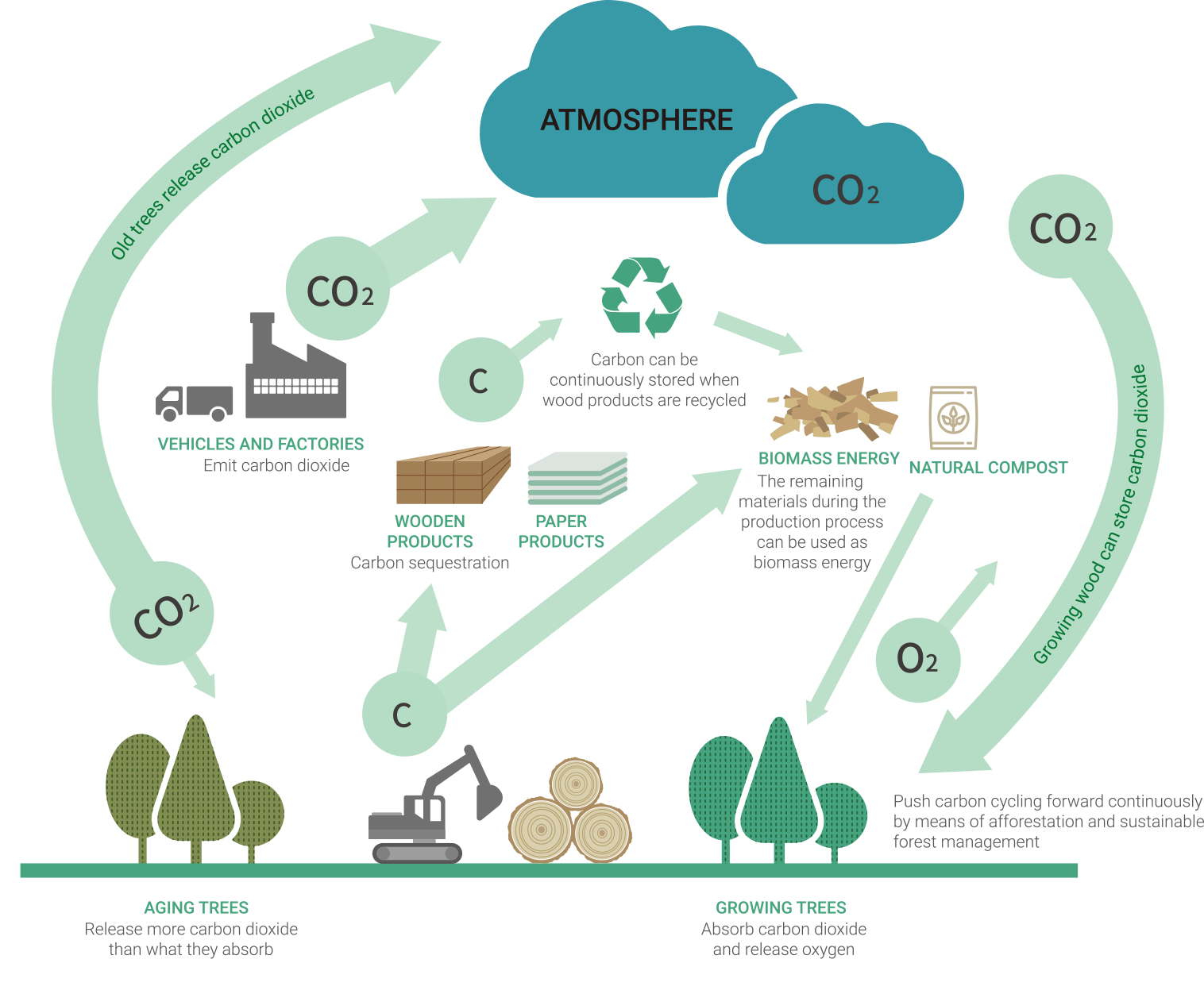
Trees and forest resources are renewable, and plants absorb carbon dioxide through photosynthesis. Therefore, global forest resources are considered to be one of the most effective mechanisms for preventing global warming.
As early as 1992, the Earth Summit held in Rio, Brazil, the United Nations proposed the "forest principle" to establish the concept of sustainable forest management.
Biodiversity
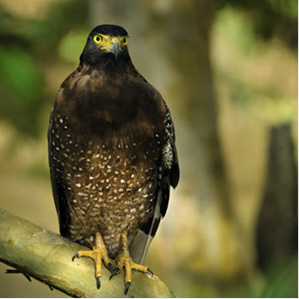
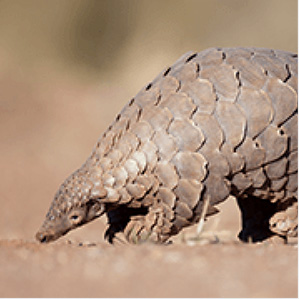
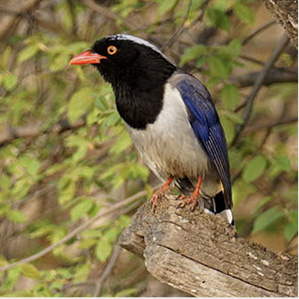
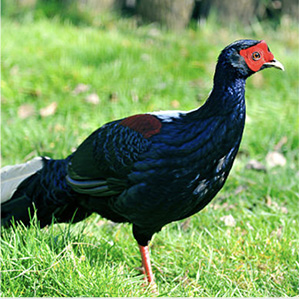
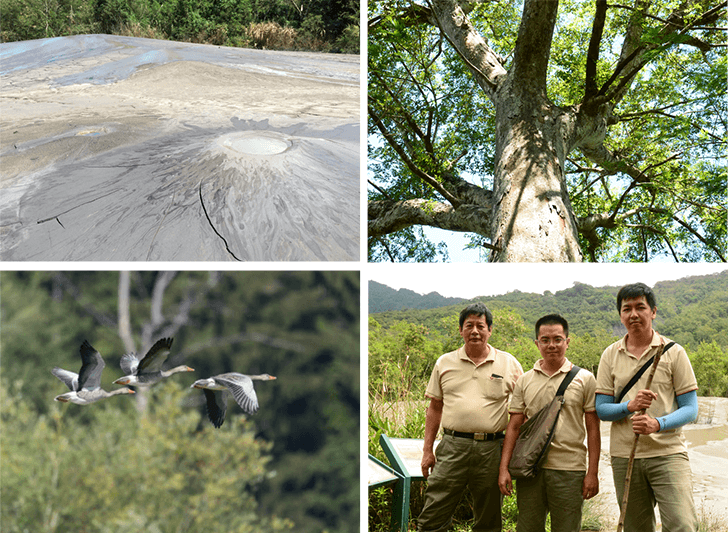
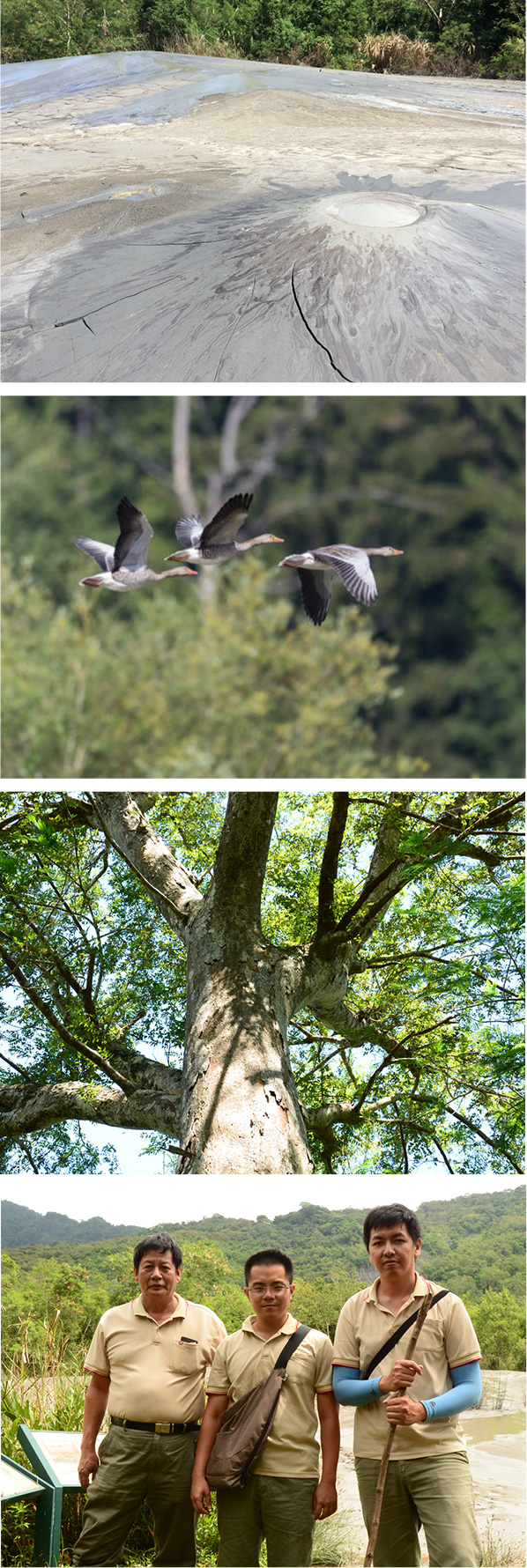
In eastern Taiwan forest lands, we have co-cultivated the "native botanical garden" and "nature reserve" with the forestry research institutes and the forest departments of the domestic universities for many years. We collect hundreds of native tree species in Taiwan, including some extinct tree species, for example, Taiwanese specialties such as "Taiwan cycads" and "Taiwanese dates", one of Taiwan's four largest woods. After being fostered for nearly thirty years, the forest farm is tall and closed, with clouds and fog haunting. Many shrubs, ferns, mosses, liverworts, mushrooms, and other plants grow with epiphyte, and the buds, fruits, and sporocarps become the food sources of many animals, making the forest farm rich of animal species. By far, the animals that have been witnessed include mountain pig, muntiacus reevesi, flying squirrel, civet cat, ferret badger, Chinese pangolin (IUCN endangered species), Indian Scops Owl, Crested Serpent Eagle (Taiwan endemic subspecies), Formosan Blue Magpie (IUCN endangered species and Taiwan endemic species), blue pheasant (IUCN near-endangered species and Taiwan endemic species), Phasianus colchicus, Chinese cobra, Trimeresurus Stejnegeri, and Bungarus Multicinctus. Many years of nurturing the forest land resulted in rich biodiversity.
Crested Serpent Eagle
Chinese pangolin
Formosan Blue Magpie
Blue pheasant
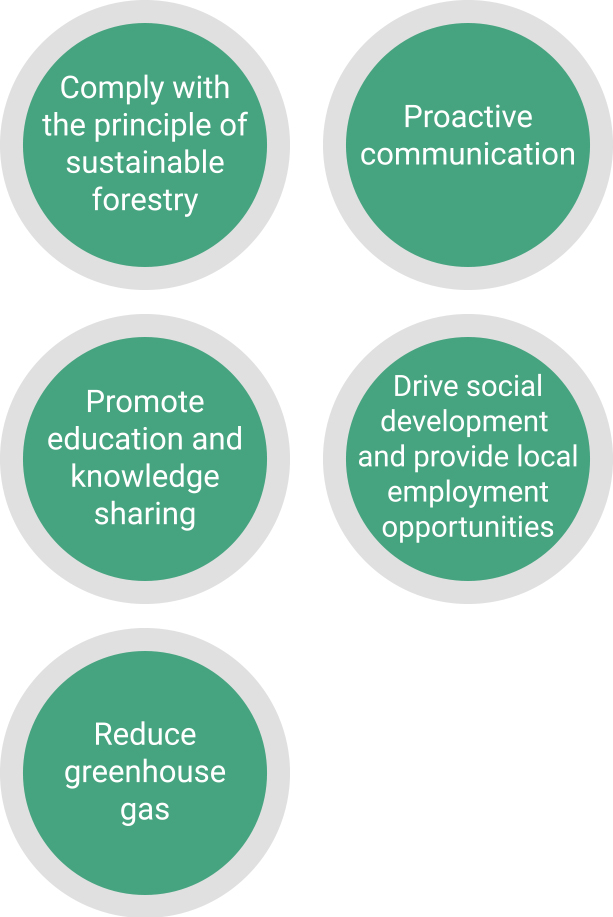
Forests are great assets. We are committed to protecting the diversities of living creatures and safeguarding soil and water conservations. We endeavor to maintain eco balance with our surrounding environments. Our sustainable development of forestry sets the growth cycle of the entire forest as its core which is managed by a multi-layer management system with the following strategies:
1.
Source wood chips and fiber raw materials from legally managed plantations.
2.
Adhere to the idea of sustainable development of forests, maintaining stable growth and carbon sequestration of trees.
3.
Offer employment opportunities and share prosperity in partnership for local economic development.
4.
Maintain harmonious and prosperous community relations.
5.
Create public welfare forest land, cultivate local ecological forestry, and nurture biodiversity environments.
6.
Strengthen the cultivation of forestation and maintain a stable atmospheric CO2 fixation.
Forest certification
We have a responsibility to contribute to the sustainable development of the world. Therefore, while pursuing economic growth, we pay more attention to the conservation of forests and the symbiosis with society. We follow sustainable forestry management principles to ensure that forests can be managed for a long time. When purchasing wood chips and fiber raw materials, priority should be given to products that have been verified by a third-party verification system and can be traced to the source to reduce the impact on the environment from the source. Common verification systems include the Forest Management Verification (FM) and Chain of custody (COC) by Forest Management Board (FSC), the Forest Certification and Chain of Custody Certification by Forest Certification Program (PEFC), and ISO 14001 environmental management standards.
CHP's overseas forestation has obtained FSC certification, and the certified forest land area is about 23,000 hectares.
Responsible management
Our commitment
Chung Hwa Pulp Biodiversity and No-Deforestation Commitment
(Approved by the ESG Committee in Q1 2026)
Chung Hwa Pulp Corporation (CHP) deeply recognizes that forest ecosystems and biodiversity are the foundation of global climate stability and sustainable human development. We actively respond to the United Nations Sustainable Development Goals (SDG 15), the Convention on Biological Diversity (CBD), the Kunming-Montreal Global Biodiversity Framework, and the EU Deforestation Regulation (EUDR), dedicating ourselves to safeguarding the positive development of natural habitats.
Starting with our own operations and extending to our suppliers and partners across the value chain, CHP collectively supports forest conservation and biodiversity maintenance to promote the well-being of both humanity and the planet. Our goal is to achieve Zero Gross Deforestation, No Net Loss (NNL) of nature and biodiversity, and a Net Positive Impact (NPI) by 2040.
◆ Compliance and Siting Principles We comply with international and local laws in our operating locations and avoid conducting operational activities in or near areas of global or national biological importance.
◆ Ecological Impact Mitigation We conduct regular biodiversity risk assessments and implement the mitigation hierarchy—Avoid, Minimize, Restore, and Offset—to achieve "No Net Loss" and "Net Positive Impact."
◆ Responsible Sourcing and Traceability We have established raw material traceability mechanisms, prioritizing the procurement of materials with sustainable forest certifications. We refuse to source from suppliers that contribute to deforestation or violate environmental regulations.
◆ Support for Natural Carbon Sinks and Negative Carbon Technologies We collaborate with academic and research institutions to deploy Nature-based Solutions (NbS) to reduce or remove greenhouse gas emissions, enhance natural carbon sequestration capabilities, and mitigate biodiversity loss.
◆ Collaboration and Advocacy We partner with value chain stakeholders to support ecological conservation projects, enhance public awareness of conservation, and respond to international biodiversity initiatives.
Responsible procurement
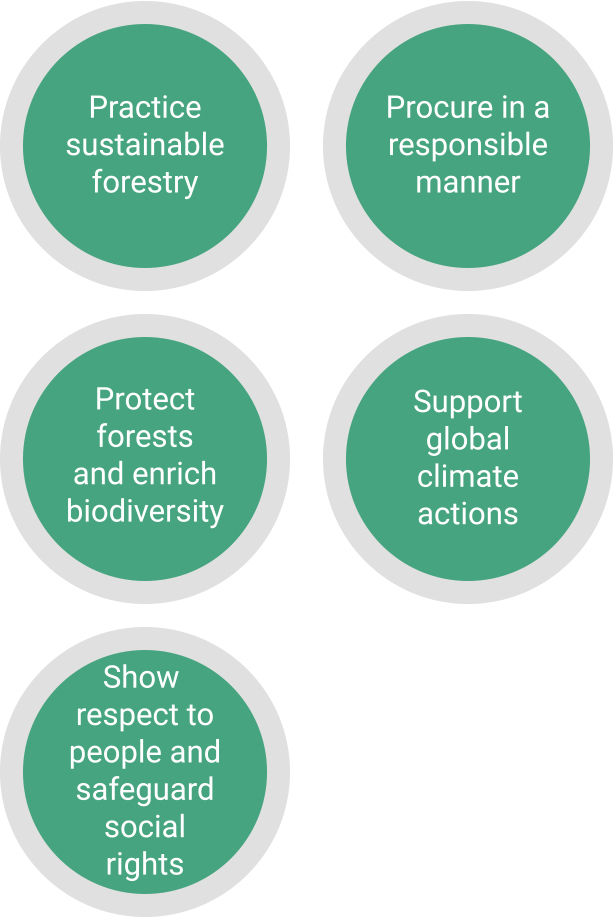
CHP's pulp, paper, and fiber are obtained from natural materials, including trees, plantations, forests, and agricultural by-products. Our mission is to be a company that sets sustainable management as the first priority. We purchase and use raw materials in a responsible manner, and commit ourselves to developing more environmentally friendly technologies to ensure the sustainability of the world's forest resources.
We prefer to use certified wood and fiber (pulp) in compliance with legal standards, and support certified green products.